
What is Quinn?
Quinn is a platform designed for book clubs, creating a dedicated space for deeper discussion, flexible reading, and shared progress. It rethinks how groups read together, supporting different paces while making it easier to engage, participate, and stay connected between meetings.
My role
As co-founder, I defined Quinn’s product from the ground up, shaping the vision and core experience from early concept through high-fidelity design. I led the UX across both the app and go-to-market website, turning early ideas into a clear, cohesive concept.
Problem landscape
Keeping a book club active requires navigating different schedules, reading paces, and levels of engagement, often leaving members out of sync. Readers hold back to avoid spoilers, limiting discussion, while existing tools offer little support for spoiler-free, in-progress conversation or structured group decisions.
our approach
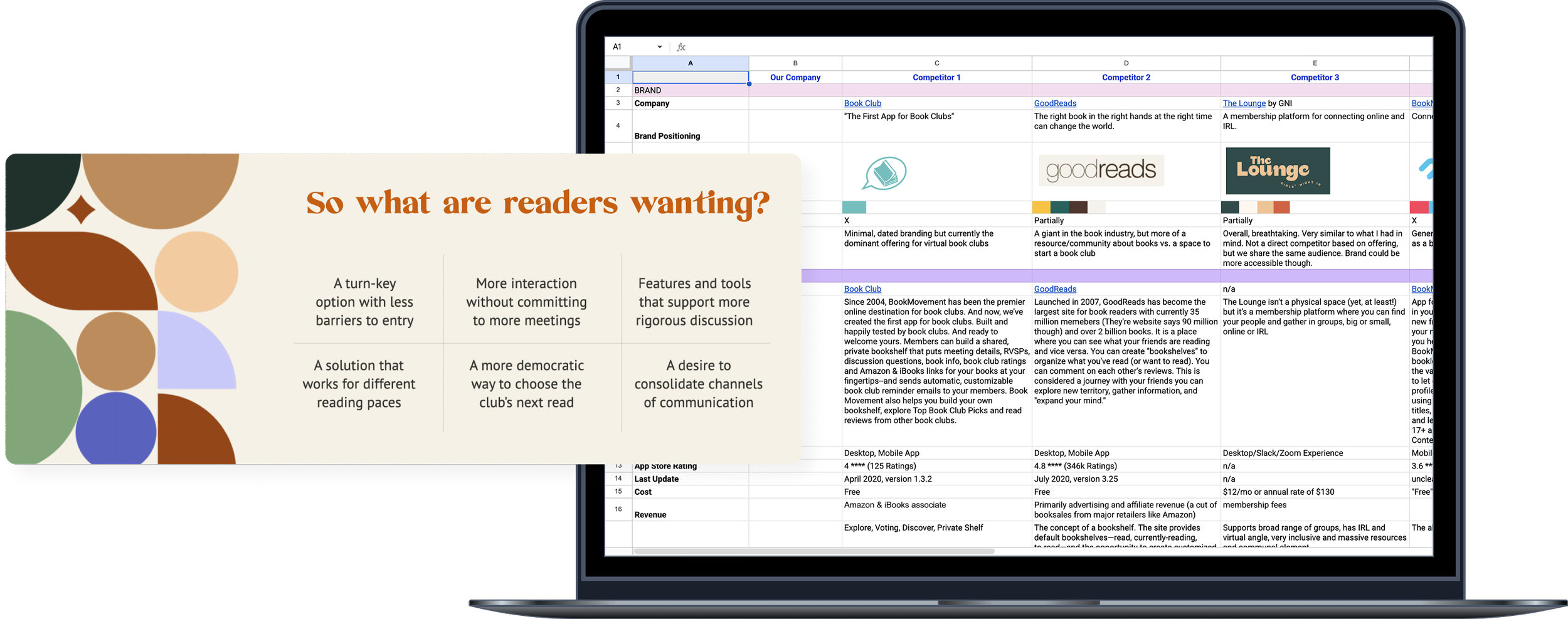
We grounded the product in user insight, surveying 70+ readers and conducting a competitive analysis of book tracking platforms. These findings shaped the core product, focusing on flexible participation, spoiler-free discussion, and more structured ways to engage and make decisions.
Brand Development
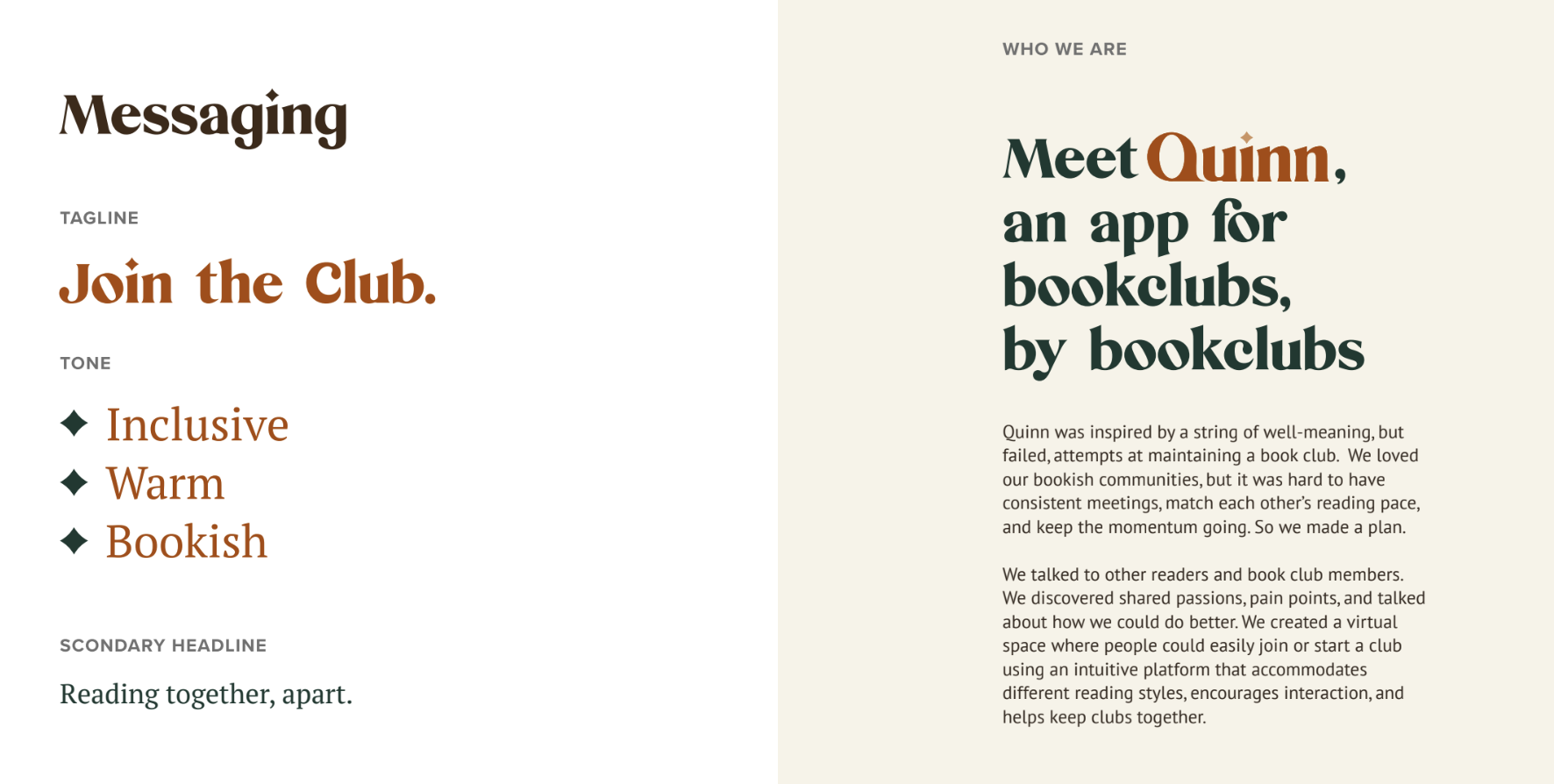
Quinn’s identity was developed alongside the product, led by the co-founder responsible for brand and marketing. While outside my direct scope, it played a key role in shaping how the product feels and communicates.
EXPERIENCE SOLUTIONs
The experience was designed to support different reading paces while maintaining a shared experience. Clear patterns guide how members track progress, participate, and engage without the system feeling fragmented.
Clubhouse
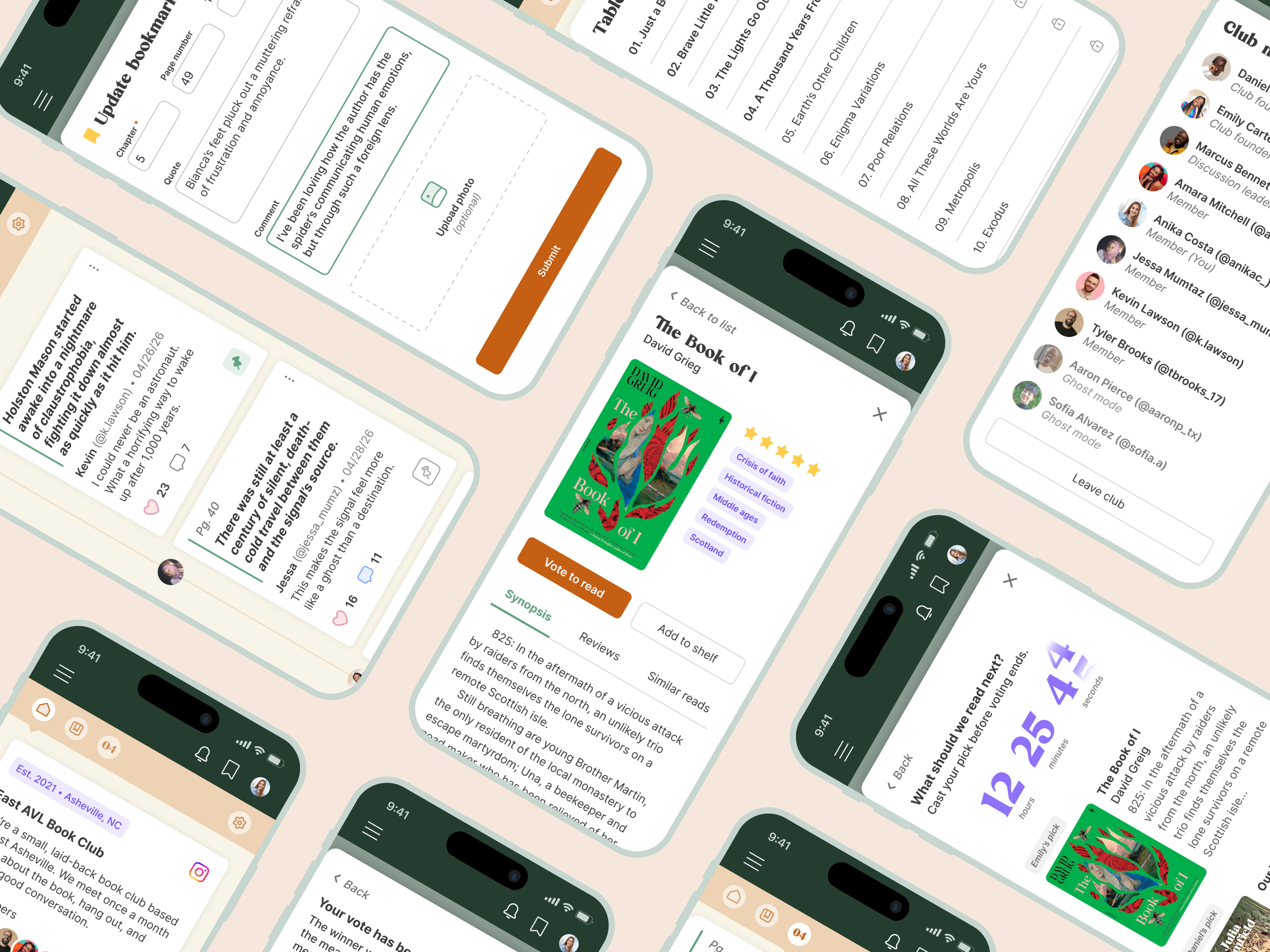
Each group has a Clubhouse, a centralized shared space to track progress, vote on the next read, and organize discussions.
chapter gatekeeping
Chapters are gated by reading progress, allowing members to unlock discussions at their own pace without encountering spoilers.
update bookmark
Members can update progress with minimal input or add richer context through quotes, notes, and images, supporting different levels of engagement.
GROUP Voting
Every member has a voice in the next read through a simple system of one recommendation and one vote.